

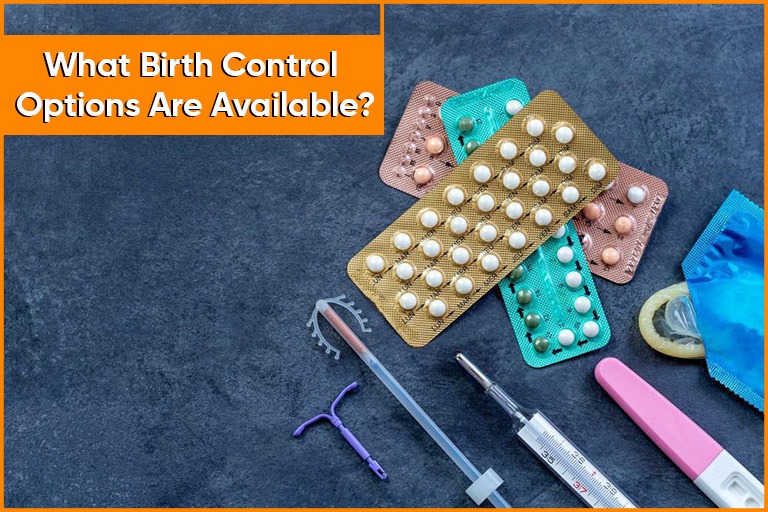
Your birth control options include:
- Barrier techniques: Examples include the diaphragm, cervical cap, contraceptive sponge, male and female condoms, and more.
- Short-acting hormonal methods: Birth control pills, the NuvaRing vaginal ring, the Xulane skin patch, and contraceptive injection are other examples (Depo-Provera). Because you have to remember to apply them on a daily, weekly, or monthly basis, these are regarded as short-acting remedies.
- Long-acting hormonal methods: Examples include the hormonal IUD (Mirena, Skyla, Kyleena, and others), the copper IUD (ParaGard), and the contraceptive implant (Nexplanon). These procedures are regarded as long-acting because, depending on the device, they remain effective for three to ten years after insertion or until you opt to have the device removed.
- Sterilization: This is a permanent method of birth control. Examples include tubal ligation for women and vasectomy for men.
- Spermicide or vaginal gel: These birth control methods are non-hormonal. A spermicide is a form of contraception that either kills or prevents the movement of sperm. Sperm cannot reach an egg to fertilize it because sperm are prevented from traveling by the vaginal pH regulator gel (Phexxi). Before having sex, you apply these products to the vagina.
- Fertility awareness methods: These methods focus on knowing which days of the month you can get pregnant (fertile), often based on basal body temperature and cervical mucus. To avoid getting pregnant, you do not have sex on or around the days you are fertile, or you use a barrier method of birth control.
It’s also crucial to be aware of emergency contraception, which can be used to prevent pregnancy after unsecured sex. Examples include the morning-after pill (Plan B One-Step, Aftera, Ella, and others).
How do the different birth control options work?
Various types of birth control work in different ways. Birth control methods may:
- Prevent sperm from reaching the egg
- Inactivate or damage sperm
- Prevent an egg from being released each month
- Alter the lining of the uterus so that a fertilized egg doesn’t attach to it
- Thicken cervical mucus so that sperm can’t easily pass through it.
What is the method’s effectiveness?
Any form of contraception must be used appropriately and consistently to be successful. Low-effort methods of contraception like IUDs, contraceptive implants, and sterilization are linked to reduced birth rates. Contrarily, strategies that call for regular abstinence or fertility monitoring are linked to greater pregnancy rates.
Is it reversible?
The method of contraception you choose depends on your reproductive goals. If you’re planning a pregnancy in the near future, you may want a method that’s easily stopped or quickly reversible, such as a short-acting hormonal method or a barrier method. If you want to prevent pregnancy for a longer amount of time, you may consider a long-acting method, such as an IUD. If you’re certain that you don’t want to get pregnant at any time in the future, you may prefer a permanent method, such as sterilization. You may find that different contraceptive options work for you at different stages of your life.
Is it compatible with your religious beliefs or cultural practices?
Some forms of birth control are considered a violation of certain religious laws or cultural traditions. Weigh the risks and benefits of a birth control method against your personal convictions.
Is it convenient and affordable?
it’s crucial to choose a method of birth control that suits your lifestyle. The best practical method of birth control for certain people may be one that is simple to use, has no unwelcome side effects, or does not interfere with sexual experience. Others don’t need a prescription because it’s more convenient. How eager you are to organize or adhere to a strict prescription regimen should be taken into account when choosing a form of birth control.
Some methods of contraception are inexpensive, while others are more costly. Ask your insurance provider about your coverage, and then consider the expense as you make a decision.
What are the side effects?
Consider your tolerance for the possible side effects associated with a particular birth control method. Some methods pose more side effects — some potentially serious — than others. Talk to your doctor about your medical history and how it might affect your choice of birth control.
Does it offer other benefits?
Some contraceptives offer advantages like more regular, lighter menstrual periods, a decreased risk of STIs or a decreased risk of certain cancers in addition to avoiding pregnancy. If you value these advantages, they might affect the method of birth control you choose.
Does it protect against sexually transmitted infections?
The only methods of birth control that provide a trustworthy defense against STDs are male and female condoms. Use a new condom each time you have sex in addition to any other birth control you use unless you are in a mutually monogamous relationship and have been tested for sexually transmitted illnesses.
Is it acceptable to your sexual partner?
Your partner may have birth control preferences that are similar to or different from your own. Discuss birth control options with your partner to help determine which method is acceptable to both of you.
How do I choose?
The most effective method of birth control for you is one that you feel confident using, is safe, and that you can use consistently and correctly. Your preferred birth control technique may change over the course of your life and is influenced by a variety of circumstances, including:
- Your age and health history
- Your reproductive goals, such as the number of children you want and how soon you want to get pregnant
- Relationship factors, including marital status, number of sexual partners, how often you have sex, and partner preferences
- Religious beliefs
- Differences between birth control methods, including how effective they are at preventing pregnancy, side effects, cost, and whether they prevent sexually transmitted infections.